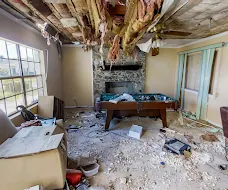
A ceiling stain is a starting observation
Describe the stain, drip, peeling finish or visible opening and the room where you noticed it. Record whether the condition is changing and what is above the area, if known. Do not assume that the nearest bathroom, roof section or appliance is the confirmed source. Keep source investigation separate from the ceiling repair proposal until the appropriate professional explains the findings.
Keep the area safe for assessment
A damaged ceiling can involve more than its painted surface. If materials are hanging, the ceiling is sagging or electrical fixtures are involved, keep people clear and obtain appropriate professional assistance. Do not puncture, open or test the ceiling to prepare a website request. Photographs and a description are useful only when they can be gathered safely. An online checklist cannot establish structural or electrical safety.
Map what is connected
Describe the room above, adjoining walls, closets, built-ins and flooring below the visible area. For an upper-floor or shared-building loss, identify who can arrange access to other affected spaces. Record any earlier leak repair and ask which findings are confirmed versus still under investigation. This gives the provider a more useful starting point than a request to repaint a stain.
Ask for the ceiling cavity and finish scope
Request a clear explanation of any proposed access opening, affected-material assessment, drying, removal and reconstruction. Ask who checks conditions before a cavity is closed and what information is handed to the repair provider. Keep texture, trim, insulation, fixtures and paint coverage identifiable in the proposal, including what is excluded or awaiting assessment.
Compare repair boundaries
Ask why the proposed repair stops at a particular location and how the provider will discuss matching existing surfaces. Identify any elective lighting or layout change separately. A small visible mark does not prove a small concealed loss, and a larger repair boundary still needs an explanation. Compare the stated work and assumptions before comparing the totals.
Organize the request and records
Send your ZIP, property type, affected room, observed changes, source investigation status and any completed work. Ask for a written scope and a process for changes. When a claim is involved, consult the insurer about documentation and coverage. Retain the source-repair and restoration records together so the next provider can understand what has already been addressed.
Official source and editorial scope
California Department of Insurance: residential property claims guide ↗
Sources checked October 14, 2026. This planning guide supports a provider conversation. Property assessment, methods, qualifications, availability and any insurance decisions need confirmation with the appropriate professional.